A manufacturing-side guide for brands, buyers and retailers turning an idea into clear, verifiable product requirements.
Two retail disclosures published on August 19, 2026 point to a meaningful split in home demand. TJX reported that comparable sales at HomeGoods U.S. increased 7% in the second quarter, while net sales rose from $2.286 billion to $2.507 billion, a rounded increase of 10%. Target's category table, released the same day, showed home furnishings and decor sales moving from $3.662 billion to $3.668 billion, or roughly 0.2%.
The comparison does not prove that fabric storage is growing across the market. It does show why sourcing teams should evaluate demand by retail channel instead of applying one headline growth rate to every SKU.
Value-led home retail outperformed
HomeGoods operates in a channel built around value, changing assortments and discovery-led store visits. For importers, brands and retail buyers, its performance suggests that consumers are still engaging with home products when the price, assortment freshness and immediate availability are compelling.
Target's nearly flat home-category result provides an important boundary. Broad mass retail did not show the same degree of home acceleration, so buyers should not assume that one assortment, price architecture or replenishment model will work across channels.
The figures are not fabric-storage sell-through data
Neither company disclosed sales for fabric bins, bedding bags or hanging organizers. The releases also provide no SKU-level purchase orders, replenishment rates, return rates or supplier allocations. HomeGoods' 7% comp increase therefore must not be described as a 7% increase in fabric-storage sales.
The results also include profit benefits from tariff refunds. Those refunds do not prove that future sourcing costs have fallen and should not replace a fresh landed-cost and supply-risk calculation.
Build the buying plan around the channel
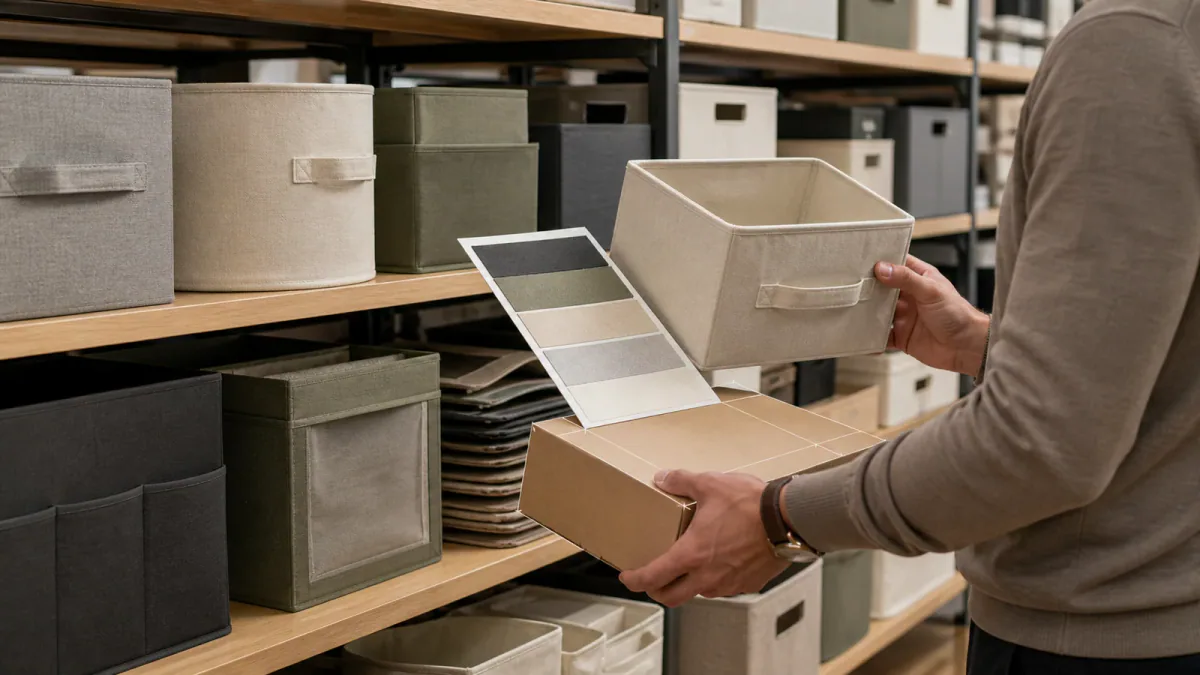
An off-price program should begin with a retail-price ceiling, landed-cost target, carton quantity, folded volume and the ability to refresh colors quickly. Buyers can test a limited group of core colors and one or two seasonal colors, then expand only after reviewing actual sell-through, returns and replenishment.
A conventional mass-retail program usually requires stronger replenishment continuity, barcode and label accuracy, packaging consistency, repeatable material specifications and clear dimensions for digital merchandising.
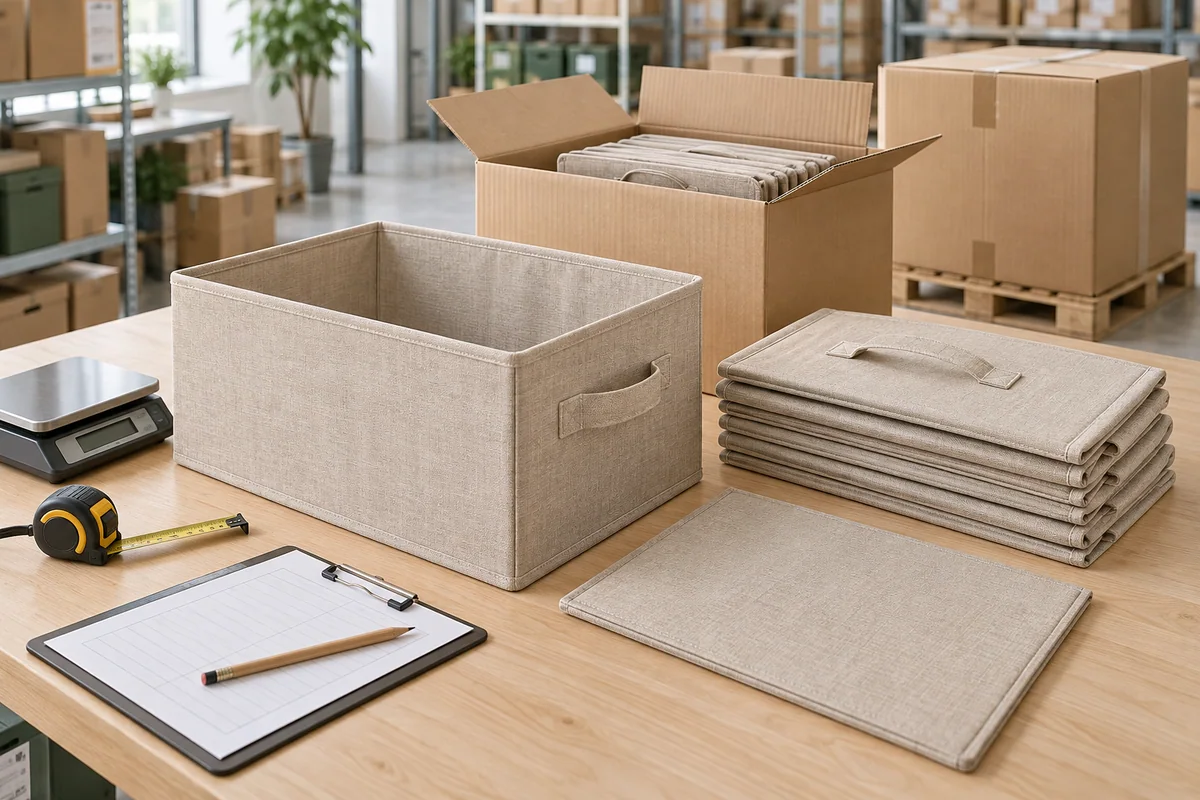
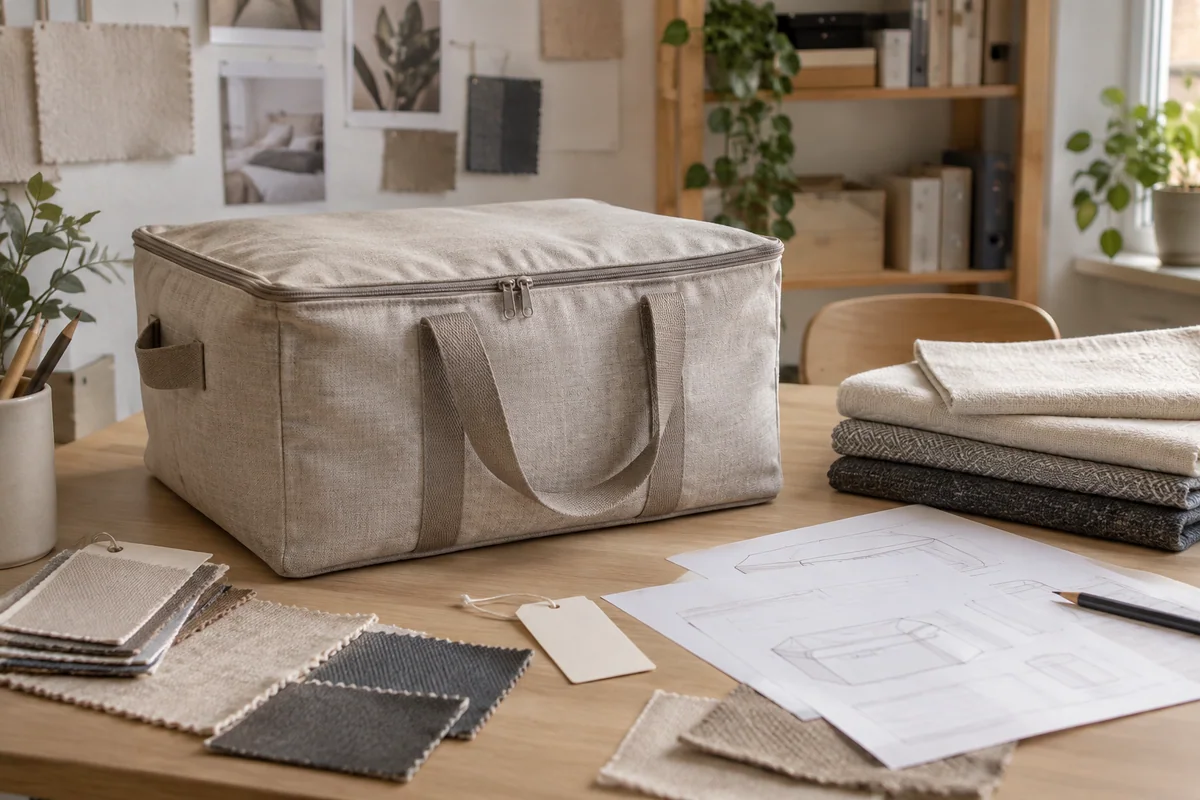
For fabric storage, the sampling brief should also cover handle load, zipper path, support board, folded volume and shape retention after loading. Fabric weight and appearance alone are not enough.
What this means for OEM/ODM programs
The evidence supports small, channel-specific validation rather than a broad order increase. Buyers can prepare separate briefs for off-price, conventional mass retail and e-commerce, then compare target price, packing efficiency, opening quantity and replenishment cycle.
NHE can help translate a buyer's channel, dimensions, construction, fabric and packaging requirements into specifications, samples and an OEM/ODM production discussion. Final materials, construction and packaging remain subject to approved samples and buyer-required testing.
What to include in an inquiry
When contacting NHE, include the target market and channel, intended retail price, carton constraints, initial quantity and planned launch timing. A clearer commercial brief allows a more useful discussion of construction, materials, packing and sampling.
Editorial note: automation assisted the research and drafting process. Check original sources and destination-market requirements before making sourcing or compliance decisions.
Sources
These original sources support the industry facts, dates and figures referenced in this article.